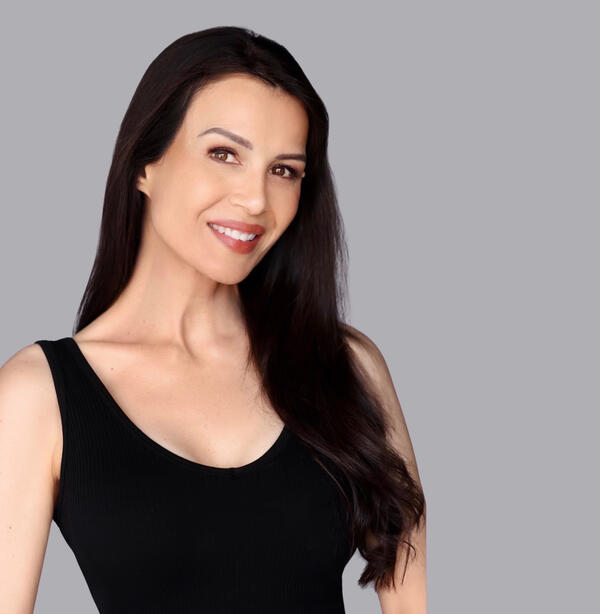
Memoir You
Tell your story. Bring it to life.Liz Alani | Ghostwriter
Memoir You
You have a story to tell—but turning a life lived into a compelling story takes craft. That’s where my process begins.Through thoughtful interviews and careful listening, I help uncover the moments, themes, and turning points that bring a life story to the page.I specialize in Seed Scenes. These 3–5 page opening moments capture the heart of a life story—designed to stand alone, or grow into a full memoir. These powerful stories can be used as a memoir opening, personal essay, or signature piece for your brand.My goal is simple: the finished piece will sound like you—only clearer, sharper, and shaped with storytelling craft.The process is collaborative and, honestly, pretty enjoyable—it feels like a real conversation. You don’t need to have it all figured out; we’ll start wherever you are. My job is to capture your voice on the page—whether the tone is inspirational, irreverent, reflective, or raw.Whether you’re envisioning a full-length memoir or a Seed Scene, I shape the material with emotional depth, humor, and clarity—revealing the story beneath the image and transforming lived experience into powerful, voice-driven narratives.Who I Work With:
I work with people who feel there’s more to their story than what’s been seen—
• women navigating identity in both the public and private spheres
• founders and creators reflecting on the meaning behind success
• individuals preserving a life story with depth and honestyI’ve shaped these experiences into memoirs of identity, life-journey narratives, and both legacy and founder stories. Some of this work has gone on to secure book deals with publishers including Simon & Schuster.Clients often tell me that I make their stories funny, moving, and meaningful—sometimes all at once.I can help you with:
• Full nonfiction ghostwriting (concept to final manuscript)
• Memoir and personal narrative development
• Co-authoring and collaborative storytelling
• Seed Scenes for memoirs, book proposals, personal essays, media, or branding
• Literary, humorous, inspirational, and trauma and survivor memoirsIf you’ve been thinking about telling your story but aren’t sure where to start, we can begin with a simple conversation—no pressure, just exploring what it could become.Book a 30-minute consultation.
Interview → Scene
How I Turn Interviews Into Memoir ChaptersOne of the most important parts of memoir ghostwriting is transforming spoken memories into vivid narrative scenes.Clients often begin with fragments—moments they remember, emotions they felt, or details that stand out. Through thoughtful interviews and careful listening, I shape those memories into structured, engaging prose.I listen for the client’s reflective, humorous, or intimate voice—the real voice, complete with pauses, laughter, and the occasional colorful language. It’s a no-judgment exploration zone.Below is a simple example of how that process works.🗣️ Part 1: Raw Interview NotesDuring interviews, I listen for sensory details, emotional moments, and turning points. Even a few sentences can contain the seeds of a powerful scene.Interview excerpt:“I remember the gym smelled like rubber mats and sweat. I was scared to death before my first fight. My coach kept saying I had good instincts but I didn’t believe him yet.”At this stage, I shape the raw moment into narrative while reflecting the client’s voice.✍🏼 Part 2: The Written SceneHere is how that same memory might appear once it is developed into a memoir scene:The gym smelled of rubber mats and old sweat the night of my first fight. I stood near the ring, wrapping my hands slowly, hoping my coach wouldn’t notice how badly they were shaking.“You’ve got good instincts,” he kept saying.I nodded, but inside I didn’t believe him yet. Not really. The boys warming up across the gym looked bigger and faster than me, and the sound of gloves pounding the heavy bag echoed through the room like a warning.💡 What This Process DoesTransforming interviews into narrative allows a memoir to:• capture the authentic voice of the storyteller
• recreate moments through scene and sensory detail
• highlight the emotional turning points in a life story
• shape memories into a compelling chapter structureMost memoirs are built this way—through conversations that gradually reveal the moments and messages that matter most.🤝 How I Work With ClientsMy memoir process typically begins with relaxed conversation—less like a formal interview and more like a coffee chat.From those conversations, I identify key scenes, themes, and turning points.I then develop those moments into narrative scenes or chapters that preserve the client’s voice while shaping the story into a compelling memoir—whether a full-length book, personal narrative, or micro-memoir.Many clients are surprised by how enjoyable the process can be—and how quickly memories begin to connect into a larger story. “Aha” moments are common.Every life contains powerful, entertaining, and sometimes profound moments. Sometimes they simply need the right questions to bring them to the page.If you’re thinking about telling your story but aren’t sure where to start, I invite you to book a 30-minute consultation. We’ll talk through your ideas, shape the strongest direction, and explore what your story could become.
Sample Chapter
Memoir Sample: “On the Lines”This personal essay exploring resilience demonstrates my approach to memoir storytelling: combining reflective voice and scene-driven narrative to bring charged moments vividly to the page.⎯On the LinesI’m humbled by the bravery it takes to call a suicide hotline. Callers have to push through anxiety, denial, embarrassment, and vulnerability. They have to trust they won’t be judged—that someone might actually help—even if their hope feels shrink-wrapped to hell.Ever tried to remove shrink wrap once it’s cooled, hardened, and fused in place? Exactly.The last thing despairing callers need is toxic positivity—someone chirping at them to buck up or insisting it could be worse. They need to be witnessed. And that’s a rare thing.I won’t pretend I have all the answers—I’m a crisis counselor, not a guru.What I will do is meet them where they are. Remind them of their worth. Maybe tease out a memory of some badass thing they’ve done. Take some pressure off the moment. Point them toward a resource or two—which, ultimately, is themselves.A lot of it comes down to hope.Hope is powerful, relentlessly stubborn—but it isn’t infinite. It gets worn down by wrong turns, gutting defeats, and tragedy. Scrambling up the ginormous hill of life, only to tumble back down again.Hope is the thing that keeps us going.In a crisis of hope, you lose the will to stay open to life. That’s really what hope is: keeping the door open to the faint chance of a better tomorrow. And, occasionally, shaking your fist at the sky and shouting, Is that all you got?!But that’s just me.And this is not about me.I’m sitting in a cubicle with memos about psychiatric facilities and shelters pinned to the walls. A purple flyer bears a Gandhi quote: “The best way to find yourself is to lose yourself in the service of others.”I’ve been on the line with Elena for several minutes. I’ve assessed her risk, though she’s evasive. She’s told me about her poor health, shaky finances, and the loss of her husband.I tell her how sorry I am. How hard that must be.She says flatly, “I can’t see a reason to continue.”That puts me on alert.I ask what’s troubling her most. She says she’s tired. Tired of trying. Tired of loss and disillusionment. Tired of loneliness.I ask who’s in her life now. She says she doesn’t have family or a relationship. She doesn’t want to burden her friends.“Maybe your friends wouldn’t feel burdened,” I say.“I don’t want to put them through it. I want to give up.”“Elena, are you thinking of killing yourself tonight?”“Tonight? No. I don’t have the strength or resources to do it yet.”She won’t tell me her plan, but assures me she won’t act soon.“I’m running out of things to keep me going,” she says quietly.Beneath her careful words runs a jagged thread of pain—the meticulous calm nearly takes my breath away.I remind myself that if someone picks up the phone, dials ten digits, and waits to be routed to a crisis counselor, they don’t want to die. Like all of us, they want a reason to live. They want a solution for pain. The purpose of suicide is to end suffering, and a solution with a pulse is always welcome.These callers with their broken dreams, broken bodies, broken hearts—they all dial those ten digits. They all want reminders that life could get better.I circle back to Elena’s friends. They seem like the one good thing left. I ask if she’d consider turning to them.“I guess I’m afraid they’ll reject me.”“Elena, I get third-party callers all the time—people begging for advice on how to save someone they love. They want to help. How do you think your friends would feel if you killed yourself without letting them know how bad things were? Would they be stunned? Cheated out of the chance to help?”“Isn’t friendship supposed to be fun?”“Sure. But if they know how low you feel now, they might get to share your joy later. You may be surprised.”She’s not open to it yet, so I offer other resources. She nixes therapy and support groups as bitching sessions. Thinks therapists are uncaring, complacent.“I hear you,” I say.A beat goes by. I give her a moment.“I didn’t expect you to have a response for everything,” she says. “I expected you to hang up after ten minutes.”“I’m not hanging up, Elena.”“Well, you could.”“I’m not hanging up.”#
Sample Chapter
Memoir Sample: “Paris, Unbecoming.”A personal narrative exploring the inner life behind the modeling world, and the story behind the image.This essay draws from my own experience to capture both the allure and the underbelly of being seen—what it meant to be looked at, and what it took to remain myself within it.
__Paris, UnbecomingElite’s model apartment teemed with six-foot girls—beauties with jutting hipbones and delicate faces. There were so many of us, it felt like a mattress warehouse for the statuesque, a Vogue-themed sleepaway camp. For every famous model, there were battalions trying to book a job.What does it say that modeling is the be-all, end-all for girls across the globe?Including this newly skinny misfit, slipping through the Paris gates.Me in Paris was about as likely as a scholar in a sports bar, a fish riding a bicycle. Paris was a wonderland for dewy-eyed models—the capital of glam, the kingdom of couture. My beginner’s luck in Milan—covers, campaigns, and steady editorial—had somehow landed me there.Elite Model Management love-bombed me, then scolded me for being twenty-one. I was ordered to say I was sixteen. I bit my tongue instead of cracking wise about the age police up my ass. I was more than a set of numbers—more than my weight or my birthdate.But isn’t that true for all of us?Still, I held massive privilege as a young, white fashion-slash-swimsuit model, so I shut the fuck up and laid low. Nodded. Shaved off a few years.I took the Metro to photographers’ studios, walked wide-eyed past the Eiffel Tower and Arc de Triomphe, shaken by the splendor.Castings were rote: show up in something form-fitting and effortlessly cool, stride in with your breeziest walk, try not to compare yourself to the exquisite teenage gazelle in front of you. Then stand there while you’re judged unapologetically, head to toe. It was transactional honesty. No one pretended not to ogle you.That was the odd perk of fashion. I got expert confirmation of what I’d always suspected: I was just shy of it. Un-boyish hips. Stubby eyelashes. Large hands. Too curvy. Too loud. Too much.It’s a strange relief—someone validating your wrongness makes you right.And when they choose you anyway? Better than drugs.After go-sees and gawking at the Champs-Élysées, I threw on my best rocker threads and crammed into Porsches with French dudes to go clubbing. VIP tables, Cristal, hash, coke, and drunk models writhing on the dance floor. A reprieve from a sublime but cutthroat market.I attended agency-organized dinners—until I realized the goal was for models to “make nice” with investors, notables, mafia-types, powerbrokers. When one investor slipped my dress strap down and breathed a come-on into my ear, I shrieked, “Fucking hell!” A stoned model pulled me aside, reminded me those men could make my career.I blurted—loudly—that I wasn’t having it.There was a darker underbelly to all this, but I couldn’t quite name it. I barely listened to gossip. I was not angling to become a Super. I flew below the radar—where you got to dress weird, say ridiculous things, see what even fit.And opt out.My last “make nice” dinner ended with me perched at a lavish table, pouring Sweet’n Low into my red wine, belching loudly, and wiping my mouth with the back of my hand. The horror.I was uninvited. Good.I refused to sell out—to patriarchy, pervs, or Parisians who could “make my career.”Make this, motherfucker.For all its rewards, modeling relies on objectification.Being an object takes emotional work. Over decades, it meant protecting whatever was still mine. I was never seen for who I was. The industry cared fuck-all about my hidden wonders.But I chose the objecthood anyway.Because if I was looked at, I existed.I was not invisible.I was something beyond myself—The Model.The girl I made up out of thin air. Sans braces. Sans frizzy hair. Sans baby fat.She amplified me—channeled poetry, beauty, presence. But she was not valued the way I valued her.They only saw a thing.She was my identity for so long. But did I want to be her—or disappear into her—or save her? In a perfect world, I’d be prized for my innate worth—with a kiss on my forehead and a side of hot damn for my looks.International modeling—gatekeepers nodding, fashion teams putting me on covers—should have made me feel like enough.But that part was up to me.Even after my long stint as The Model, enoughness was like disrobing after a cover shoot and standing naked in the dressing room. Girl, now what?Because underneath it all, I was still me.Not the thing they saw. Not the girl I made up.Just me—unpolished, unchosen, and responsible for deciding if that was enough.Good thing I know how to reinvent—and trade couture for big girl panties.#
Seed Scene: "Livie"
Seed Scenes are 3–5 page opening moments that capture the heart of a life story—designed to stand alone, or grow into a full memoir.Livie is a skydiving influencer chasing the pure thrill that made her—while questioning what’s been lost in the process of being seen.__LivieWe’re sprawled in Otto’s belly—Ganja, Sam, RJ, Dizzy, Madman—and me, dead center. I’m rocking a t-shirt that says Skydiving: infinitely better than the usual crap you do.Otto the jump plane rumbles and shivers in the golden sky. We ride higher, rising over the little Texas dropzone. Ten minutes until the roaring hallelujah, the humongous hell yes.I grin like a loon and who can blame me? I have a pulse and a parachute and a jones for the sky. Good sky and a rig and the world is yours, a playground washed in blue.Jumpers cluster on the floor and the bench as the Twin Otter climbs. The press of altitude and jostling bodies does me good. What a relief to be on a sunset load without a videographer, without needing to be “on” or perform a jump.Sam smiles over at me. “Let’s go do a belly jump!”“Somebody hold my beer,” I joke. “And my earrings.”Madman eyes me. “And your bag of money—don’t want that weighing you down.”“Dude,” I say. “Way to kill the mood.”Dizzy chuckles. “Like you’d turn down a sponsorship, Mad.”“I would and I have,” Mad says.“For what, Depends?” Sam jokes.“We’ve Got You Covered from 13,000 Feet Down,” RJ quips.Madman snorts. “Skydive influencers give the sport a bad name. Enough said.”I can’t help myself, I want to nip this tired convo in the bud. “You can be good and make money. It’s about giving back—try it sometime.”Ganj says, “Any positive attention for our sport is a win in my book.”“Hell yeah,” says Dizzy. “A sick jump with a million views juices the DZ, draws tandem passengers, gets people amped to do AFF.”“If you want to follow anyone follow pros, not posers,” Madman says.“Livie ain’t doing shitty skydives for Instagram clout,” RJ insists. “She’s making our 6-way team better.”“Exactly,” Mad says. “We won Nationals—as a team.”For a beat it’s silent, just Otto’s drone and throaty roar.Then Ganja yelps, “Teamwork makes the dream work!”We burst out laughing, all of us just punchy and stoked to be in the sky.RJ and Dizzy play “never have I ever”—swooped near a powerline, pulled below two grand.Ganja weaves his hair into side braids, light from the aft window catching the dark strands. It’s Dutch braids, for me—they pop for content. Lacing my long wild strands into braids is the closest I get to meditation. I wear a tube bandana over them for skydiving, then tuck them into my helmet.“Name that aviator,” Ganj says. “Who said, ‘The farther we penetrate the unknown, the vaster and more marvelous it becomes’?”Dizzy grabs his fly, flashing DUMB LUCK knuckle tats. “Not penetrate the unknown!”I roll my eyes. “It was Lindbergh, Ganj.”RJ gripes, “That’s what I was going to say!”I shoulder bump him. “You’ll get the next one.”As Otto nears jump run Dizzy yells, “Let’s go shred!”“Ain’t nothin’ to it but to do it,” Ganja says.“That’s some Maya Angelou shit, right there,” I banter.Madman grunts. “That’s some shit, all right.”Sam grins, “Face it, Mad. There’s no place you’d rather be.”RJ says, “Yeah, Madman. We’re the sexy six!”Mad stifles a grin. “You’re lucky stupidity isn’t painful, RJ.”An easy silence washes over us. I close my eyes and breathe into the quiet that comes before a jump. Instead, it’s loud—Mad got to me. Is it true, am I tarnished? Nobody loves jumping more than me, I’ve been obsessed since day one. The feeling is no less pure…but am I? It’s scary to think that the one true thing for me could shapeshift.But it’s still there. Something restless. Pacing. Waiting.At altitude, the six of us sling our arms around each other for our ritual huddle and pre-jump fingerslide-fistbump. We slap hands and grin, wild-eyed. Something deep-felt passes between us. We’re a tribe—we jump because it’s bigger than us and requires the whole of us. It mutes the animosity. The dumbfuckery.We get in position to exit. Sam pulls the door up, scans the air and double-checks our spot for safety. The horizon blazes calypso pink.“Let’s go raise hallelujah,” I say.RJ belts, “See y’all in the glow!”The exit light signals green and Sam gives the countdown and we jump into the velvet rush of sky, while all around us the sunset flames.The soft crush of air is like body surfing an airwave then hovering weightless on the swell. Soaring on a cushion of air is bananas.Freefall isn’t like falling, like you’d think. It’s more like windy floating. You know how it feels to stick your hand out of a car window, letting it roller-coaster against the force of rushing air? Now imagine that’s your whole body, with you in precise control.It’s just physics, man. But the pure freedom, the weightlessness, is profound.The six of us get right to knocking out our dives. We nail most of the formations and it’s stupid fun, building sky shapes. One formation is tricky—Dizzy misses a point but we decide to stick with the circus.Then we do sky tricks and freefly in the wild glow of sun until Sam slows his track and waves his arms. All of us track off, until it’s just me and the neon red sky.At three grand I pull and my canopy unfurls and all is buttery. Except the quiet doesn’t come. For a split second, I look for the camera.#
Seed Scene: "Tess"
Seed Scenes are 3–5 page opening moments that capture the heart of a life story—designed to stand alone, or grow into a full memoir.Tess is a founder post-exit, standing in the in-between—no longer defined by what she built, and not yet sure who she’s becoming.__TessI wind the violet wraps around my knuckles, barber-pole them across my hands and down my wrists, back again in X’s, pressing the Velcro closed. Clenching my fists, spreading my fingers to test the wraps, I take in the renovated guesthouse.In place of a rarely used bed: a treadmill that folds against the wall. Floor-to-ceiling mirrors reflect colorful dumbbells and workout bands tucked into birch baskets. A vegetable-tanned leather mat. Hi-fi boombox.Mounted dead center, a heavy bag. Retro cream leather, hand-crafted.The gym porn makes me chuckle. I haven’t had time to work out in two decades.For twenty years, Betsy Banners defined my rhythm, my worth, my reason for being.I built it from scratch at twenty-five. While most people my age were partying or hiking in the Himalayas, I was sewing flags—American labor, American materials—learning every inch of the work. I never cut corners. I protected the company and the people inside it.I wasn’t just the founder. I was the caretaker. The steward. The one who made sure it all held.When the offer came on my forty-fifth birthday, I said yes. Of course I did.I was elated, knowing I had done something worthwhile—me and my can-do, my hand-sewn American flags. A college dropout with a dream.The sale process tested me. But closing the deal—the clean break—felt like a sun flare with a New Wave soundtrack. Proof that all of it had meant something. All of it—the ideals, the craftsmanship, the backbone.I didn’t let myself think about what came after, because that would make it real. If the deal fell through, I couldn’t afford the distraction. Or the letdown.So when the wire hit, I didn’t miss a beat. I gutted the guesthouse. Built this.It was my improvised post-exit plan. Something to control.My eyes land on the “legacy wall”—my framed 40 Under 40 cover, trade features, glossy spreads about quality and niche manufacturing. Me, smiling as CEO—hello, y’all.I bootstrapped an American flag company on my own.And now I don’t know what to do with my hands.A gasp catches in my throat. I stare at the heavy bag.You don’t have to know yet, I tell myself. You can be in the in-between.You don’t have to have a freaking breakdown.Through the glass doors, I imagine my flags unfurling across the country. I could go see them. Trace the life I built from one end of the map to the other.The thought flickers—open road, long horizon. Maybe an Airstream. A mutt named Banjo or Bingo. My own Great American road trip–from Cadillac Ranch to The Redwoods.But I’m getting ahead of myself.I think back to the first boxing class. A closing celebration, I told myself. I had just made two and a half million dollars—not crazy money, but enough. I had done it!I walked into that gritty gym on a dare.Because women shouldn’t punch.Women shouldn’t own their success.Women shouldn’t be alone at midlife.Sweating and breathless, I threw jabs, clumsy wild hooks, uppercuts that dissolved in midair, crosses that barely grazed the bag, my balance slipping under me.It was humbling, enthralling.Boom. Smack. Thud.Something lit inside me. A heat that wanted out. I didn’t know what to do with it—but I was glad it was there.A woman across the gym caught my eye and smiled. “Keep going.”Keep going.I press my palm to my heart—like a reflex, like a pledge—then let it fall.Slowly, I tug on the gloves and step toward the bag.#